Picture this: You turn your back for five seconds, and your crawler is halfway up the stairs. Heart-stopping, right? If you’re nodding right now, you’re exactly who needs an expandable baby gate in your life.
Let’s cut through the noise. This guide will show you exactly how to choose, install, and use expandable baby gates that actually work—without making your home look like a maximum-security prison.
Finding the perfect expandable baby gate isn’t just about safety (though that’s priority #1). It’s about maintaining your sanity and your home’s vibe while keeping curious little explorers away from danger zones.
But here’s what most parents don’t realize about baby gates until it’s too late…
Table of Contents
Understanding the Importance of Baby-Proofing With Expandable Baby Gate
Safety Statistics Every Parent Should Know About Expandable Baby Gate
You’d think your home is the safest place for your baby, right? Think again. Over 2 million children experience household injuries annually, with falls accounting for over 40% of these accidents. The scariest part? About 80% of these incidents happen when a parent is nearby but distracted for just seconds.
Stairs are particularly dangerous zones – they’re responsible for more than 100,000 injuries to children under 5 each year. And those injuries aren’t just bumps and bruises – about 12,000 of them require hospital stays.
The good news? Nearly 90% of these accidents are completely preventable with proper baby-proofing measures.
Developmental Milestones That Trigger New Safety Concerns
Your sweet, immobile newborn transforms into a curious explorer faster than you can say “Where did they learn to do that?”
Around 6-8 months, babies master rolling and sitting up, suddenly giving them new perspectives on their world. By 8-10 months, most babies are crawling, and your previously safe coffee table corners become head-height hazards.
The walking milestone (typically 9-15 months) is when home safety concerns skyrocket. Once your little one discovers stairs, you’re in a whole new ballgame of safety challenges.
The Role of Expandable Baby Gates in Comprehensive Baby-Proofing
Expandable gates aren’t just accessories – they’re essential safety tools that adapt to your unique living space. Unlike fixed-width gates, expandable versions work in doorways, hallways, stairways, and those awkward wider spaces that standard gates can’t handle.
They create instant safety zones in your home, containing your little explorer to areas you’ve thoroughly baby-proofed while blocking access to danger zones like kitchens, bathrooms, and stairs.
The versatility of expandable gates makes them the MVP of your baby-proofing arsenal. They can be moved as needed, expanded to fit different spaces, and many can be configured in different shapes to section off irregular areas like fireplaces.
Parents who invest in quality expandable gates consistently report greater peace of mind and fewer close calls compared to those using fixed gates or no gates at all.
How Early Should You Start Baby-Proofing?
The most common baby-proofing mistake? Waiting too long.
Many parents assume they have until their baby starts crawling, but that’s actually cutting it dangerously close. Experts recommend beginning your baby-proofing efforts during pregnancy – ideally during the second trimester when you still have energy but before the third-trimester fatigue kicks in.
Why so early? Installation takes longer than you think, products may need to be ordered, and some modifications might require professional help. Plus, getting used to using gates, latches, and other safety devices before baby arrives means these habits are already formed when you’re sleep-deprived with a newborn.
Remember – babies develop at wildly different rates. Some reach mobility milestones weeks or even months earlier than average. Being proactive with safety measures, especially installing expandable gates, is always better than scrambling to baby-proof after your little one has already started exploring.
Types of Expandable Baby Gates and Their Benefits
A. Pressure-Mounted vs. Hardware-Mounted Gates
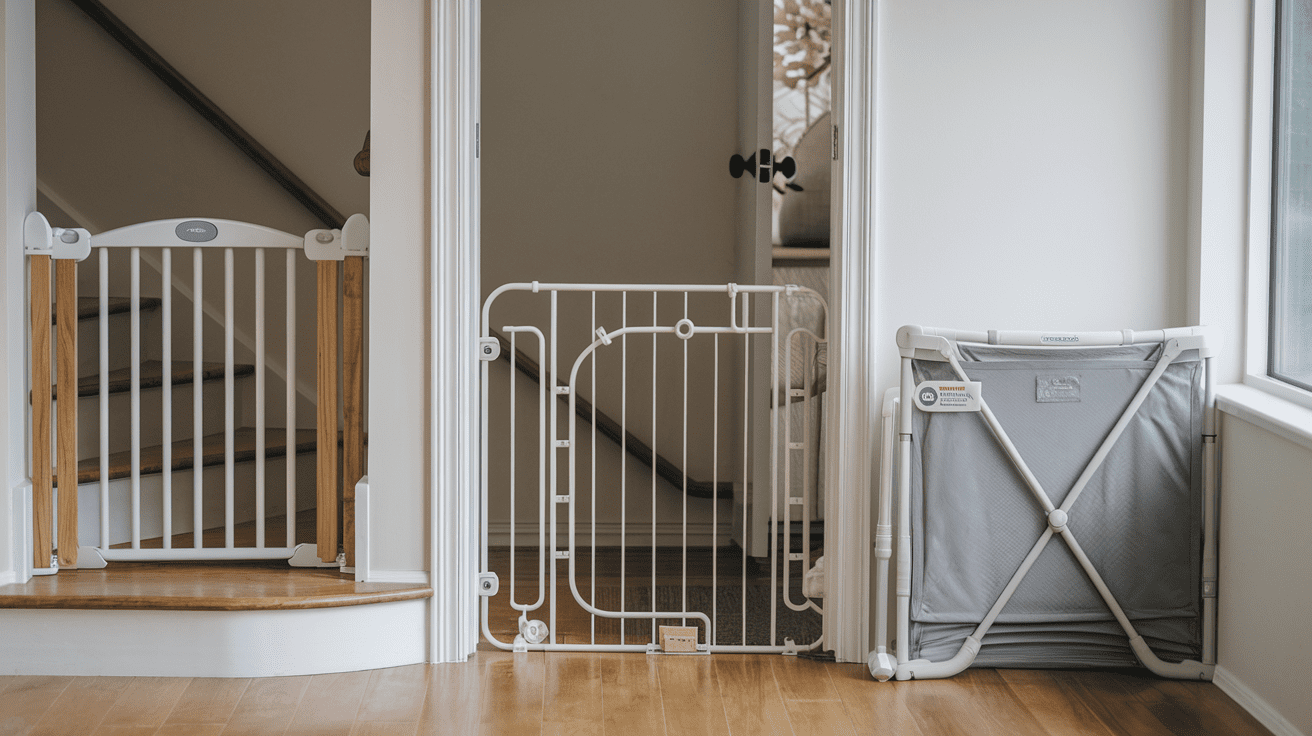
When it comes to expandable baby gates, you’ve got two main installation types to choose from:
Pressure-Mounted Gates
- Quick setup with no tools required
- No holes or damage to your walls
- Easy to move between different locations
- Better for doorways and flat surfaces
- Typically less secure for top of stairs (not recommended there!)
Hardware-Mounted Gates
- Permanently attached to walls with screws
- Maximum stability and security
- Essential for top-of-stairs use
- Cannot be accidentally pushed over
- Slightly more work to install initially
Most parents end up getting at least one of each. Hardware-mounted gates work great for high-risk areas (think staircases), while pressure-mounted ones are perfect for dividing rooms or temporary barriers.
B. Width Ranges and Adjust Ability Features
Not all doorways and openings are created equal—that’s why expandable gates come in various width ranges:
- Standard expandable: 29-42 inches
- Extra-wide: 42-62 inches
- Super-wide: 60-144+ inches (these often convert to play yards)
Look for gates with:
- One-handed operation mechanisms
- Adjustable width increments (the smaller the better for perfect fits)
- Extension panels for customizing the width
- Dual-locking indicators so you know when it’s properly secured
Some smart gates even have pre-set width positions with satisfying “clicks” when locked in place. This feature is a lifesaver when you’re frequently moving gates between spaces with different widths.
C. Material Options: Metal, Wood, and Mesh
Your gate’s material affects everything from durability to home decor vibes:
Metal Gates
- Typically aluminum or steel construction
- Most durable option (withstands toddler tantrums!)
- Easy to clean with just a wipe
- Modern aesthetic with slim profiles
- Available in various finishes (bronze, black, white)
Wooden Gates
- Warmer, more traditional appearance
- Blends better with home furnishings
- Can be painted to match your decor
- May show wear more quickly than metal
- Often heavier than other options
Mesh Gates
- Lightweight and portable
- Often retractable for space-saving
- Less visually obtrusive
- Good temporary solution
- Not always as durable long-term
D. Special Features Worth Considering About Expandable Baby Gate
The difference between a good gate and a great gate? Those extra features that make parents’ lives easier:
- Auto-close function – Closes the gate automatically if you forget
- Hold-open feature – Keeps gate open when needed (like during a party)
- One-handed operation – Because you’re always carrying something else
- Directional opening – Some gates only open one way (safer for stairs)
- Extra-tall options – For little climbers and jumpers
- Pet doors – Let the cat through while keeping baby contained
- Visibility markers – Help prevent adults from tripping at night
Many parents swear by gates with foot pedal openers—absolute game-changers when your hands are full with a squirmy baby and three grocery bags.
E. Budget-Friendly vs. Premium Options
You’ll find expandable gates across the price spectrum:
Budget Options ($20-$40)
- Basic functionality
- Typically pressure-mounted only
- Fewer adjustability features
- Standard heights
- Limited aesthetic options
Mid-Range ($40-$80)
- Better construction quality
- More secure locking mechanisms
- Smoother operation
- Additional height options
- Better looking finishes
Premium ($80-$200+)
- Top-tier materials and construction
- Extra convenience features
- Designer finishes to match home decor
- Extended warranties
- Multi-panel configurations
Selecting the Perfect Expandable Baby Gate for Different Areas
Stairway Safety: Top and Bottom Requirements
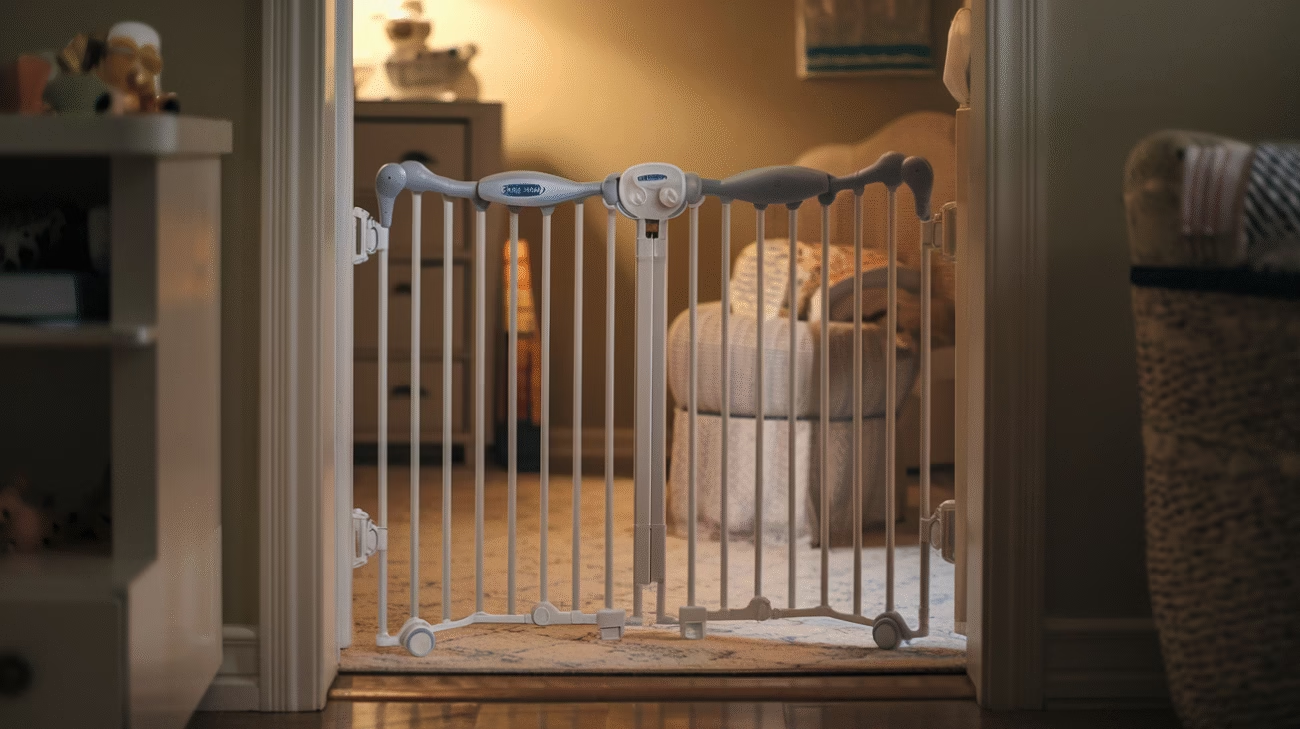
Not all stairways are created equal, and neither should your safety approach be. At the top of stairs, you absolutely need a gate that screws into the wall—no pressure-mounted options here. The risk of a gate being pushed over by a curious toddler is just too high.
Look for gates with these features for top-of-stairs:
- Hardware-mounted installation (no exceptions!)
- One-hand operation so you can hold baby while opening
- Auto-close functionality
- No threshold bar at the bottom that could cause tripping
For the bottom of stairs, you’ve got more flexibility. Pressure-mounted gates work fine here since a tumble would be shorter. Just make sure there’s enough space for the gate to open fully without blocking the bottom step.
Doorways and Wide Openings Solutions
Standard doorways are easy—almost any expandable gate will do. But those wide openings between living spaces? That’s where expandable gates really shine.
Most expandable gates handle openings up to 48 inches, but what if you’re dealing with an open floor plan or extra-wide archway? You’ve got options:
- Extra-wide expandable gates can stretch to 60+ inches
- Multi-panel configurations allow coverage of openings up to 192 inches
- Retractable mesh gates roll away when not needed—perfect for occasional use in wide spaces
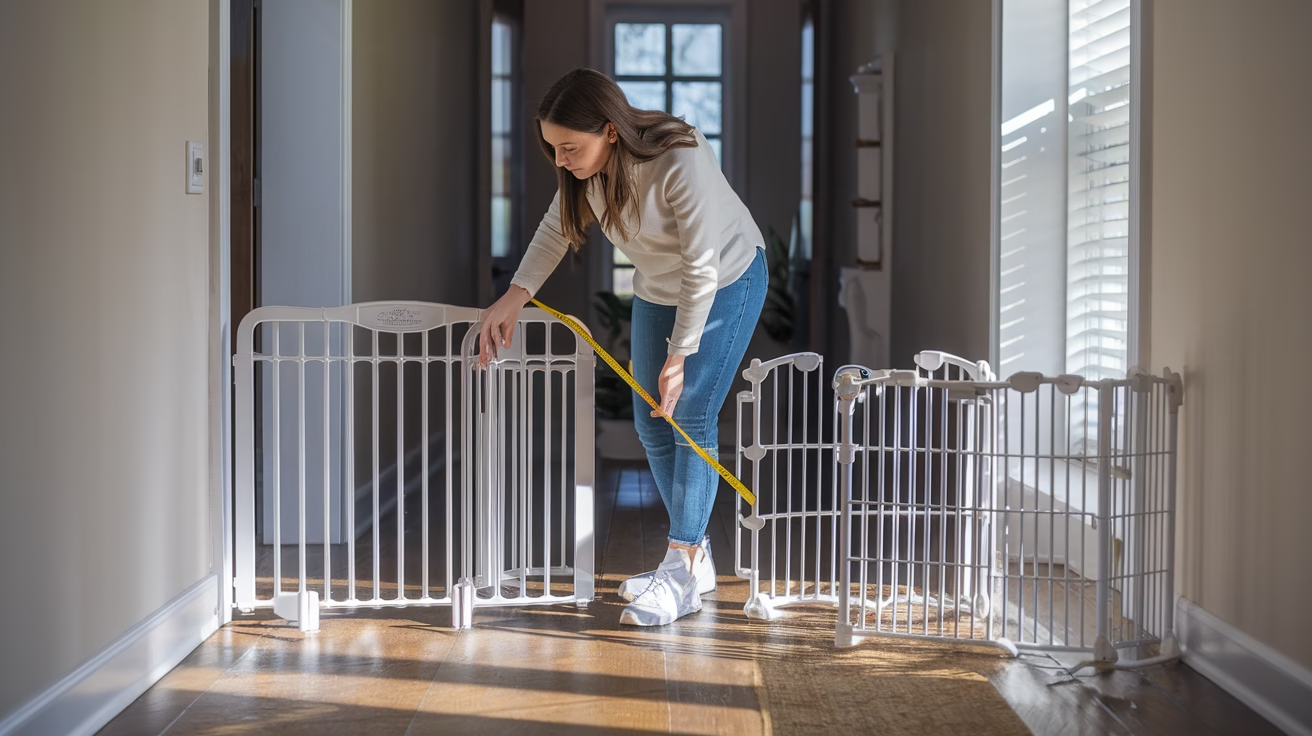
The key is measuring accurately. Don’t just measure the width—check if your walls are straight and if there’s sufficient flat surface on both sides for mounting.
Irregular Spaces and Custom Configurations
Those awkward spaces in your home? They need protection too.
Fireplace surrounds, angled walls, or oddly shaped room divisions can be tricky. Consider these solutions:
- Play yard systems that can be configured into custom shapes
- Gate extension panels to add length where needed
- Wall-mounted gates that can be installed at angles
- Swing gates with adjustable angles for non-straight installations
Some expandable gates come with mounting hardware specifically designed for banisters or round posts—game changers for irregular spaces.
When dealing with baseboards, look for gates that include spacers in the package. These little pieces compensate for the protrusion so your gate stays level and secure.
Outdoor and Pool Area Protection
Outdoor safety requires gates that can withstand the elements. For decks, patios, and especially pool areas, you need specialized solutions.
Pool areas demand gates with:
- UV-resistant materials that won’t degrade in sunlight
- Rust-proof components (look for aluminum or treated metal)
- Self-closing, self-latching mechanisms that meet local pool safety codes
- Lock indicators that show when the gate is properly secured
For general outdoor spaces, weatherproof expandable gates offer flexibility. Some retractable models work brilliantly for occasional outdoor use, letting you maintain your view when adult supervision is present.
Installation Guide for Maximum Security of Expandable Baby Gate
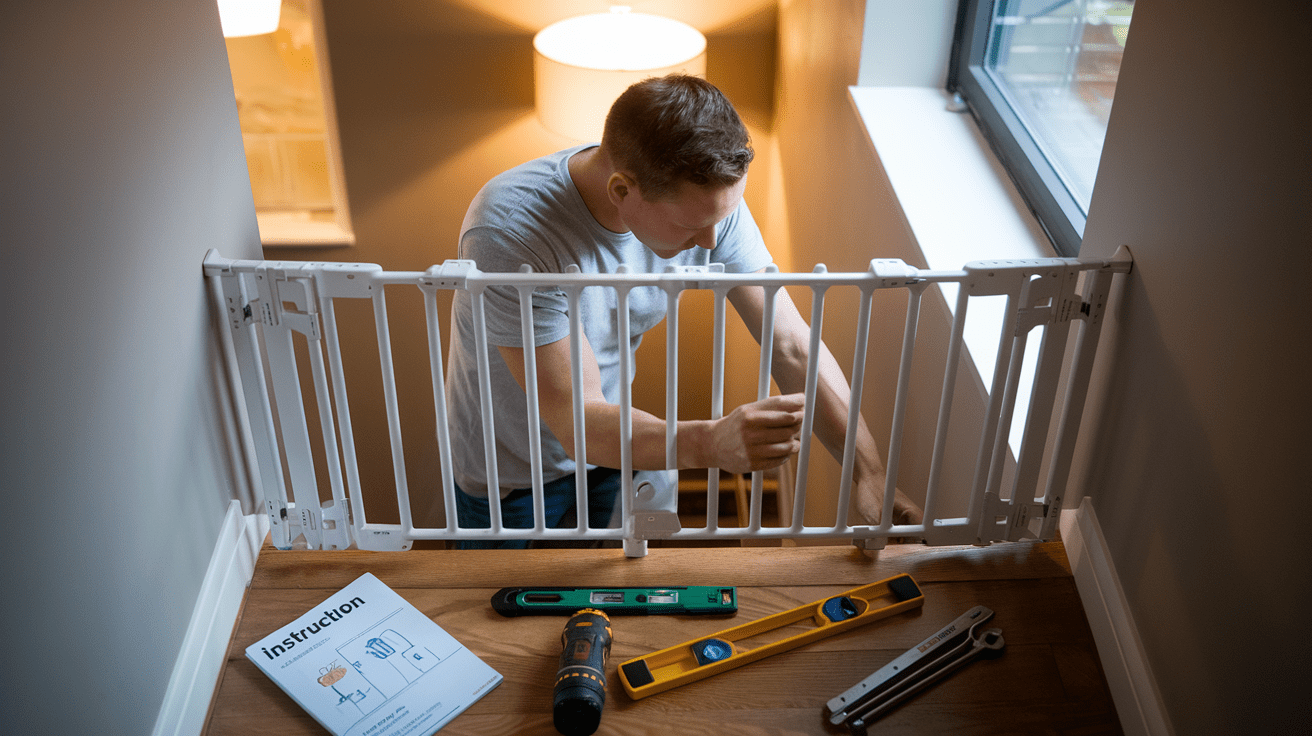
Tools and Equipment You’ll Need
Getting your expandable baby gate installed right isn’t rocket science, but you’ll need a few tools to make the job smooth and secure:
- Measuring tape (accuracy matters!)
- Pencil for marking installation spots
- Drill with appropriate bits
- Screwdriver (usually Phillips head)
- Level to ensure your gate sits straight
- Wall anchors if you’re mounting to drywall
- The instruction manual (seriously, don’t wing it)
- Mounting hardware that came with your gate
Some parents find having a second person helps hold things steady while you mark and drill. Trust me on this one—wrestling with a gate while trying to mark drill points is no fun.
Step-by-Step Installation Process of Expandable Baby Gate
Measure twice, install once: Determine exactly where your gate will go. Typically doorways, hallways, or stairway entrances are prime spots.
Mark your mounting points: Hold the gate in position and mark where brackets need to go. Double-check they’re level!
Pre-drill holes: This prevents splitting wood and makes installation way easier. If you’re drilling into drywall, insert those wall anchors now.
Attach the mounting brackets: Secure them firmly with the provided hardware.
Mount the gate: Connect the gate to the installed brackets according to your specific model’s instructions.
Adjust tension: Most expandable gates need proper tension to stay secure. Follow manufacturer guidelines here.
Test the locking mechanism: Open and close several times to ensure it operates smoothly.
Common Installation Mistakes to Avoid
The difference between a gate that works and one that doesn’t often comes down to these easily avoidable mistakes:
Ignoring the manual: Each gate model has specific requirements. What worked for your friend’s gate might not work for yours.
Skipping the wall anchors: Mounting directly to drywall without anchors is asking for trouble. Those tiny screws will pull right out when your toddler pushes on the gate.
Uneven installation: A crooked gate won’t close properly and creates dangerous gaps. That level isn’t just a suggestion!
Installing upside down: Yes, this happens more than you’d think! Gates have a specific orientation.
Using the wrong screws: Those screws in your junk drawer might seem similar, but using the hardware that came with your gate ensures proper fit and strength.
Testing Your Gate’s Security
After installation, put that gate through its paces:
The shake test: Grab the top of the gate and give it a firm (but not violent) shake. It shouldn’t move more than half an inch in any direction.
The pressure test: Push against the center of the gate with moderate force. It should resist without significant give.
The latch check: Open and close the gate 10+ times. The latch should engage fully every single time without catching or requiring extra force.
The gap inspection: Check for gaps larger than 3 inches anywhere around the gate—particularly at the bottom and sides.
The sound check: Listen for any creaking or unusual sounds when the gate is under pressure. These could indicate poor installation.
- Maintenance Tips for Long-Term Safety
Baby gates aren’t “set it and forget it” safety devices. Keep yours in top shape:
Weekly inspections: Check all mounting points and hardware for tightness.
Clean the tracks: For sliding gates, vacuum or wipe out tracks where debris can prevent proper closure.
Lubricate moving parts: A tiny bit of silicone spray on hinges and latches keeps things moving smoothly.
Tighten as needed: Gates loosen over time with regular use. Keep that screwdriver handy.
Replace damaged parts: If anything breaks or shows significant wear, contact the manufacturer for replacement parts rather than jury-rigging a solution.
Re-test regularly: Repeat your security tests monthly to catch any developing issues before they become hazards.
- Remember, even the best gate is only as good as its installation. Taking time to get this right is literally a matter of child safety—no shortcuts allowed!
Beyond the Basics: Advanced Baby-Proofing Strategies of Expandable Baby Gate
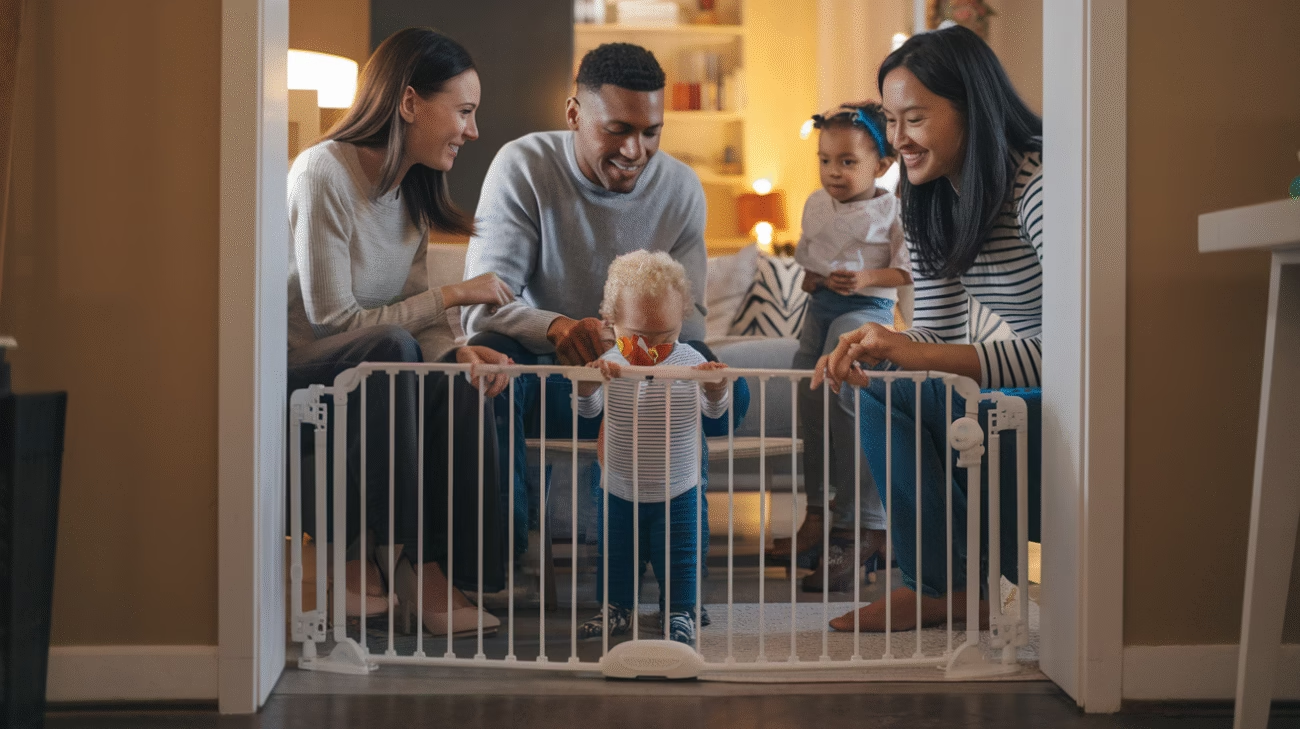
Creating Zones of Safety Throughout Your Home
Baby-proofing isn’t just about slapping gates at the top of stairs. Smart parents think bigger – they create entire safety zones in their homes.
Start by mapping your house into green zones (totally safe), yellow zones (supervised access), and red zones (absolute no-go areas). Your kitchen might be a mix – lower cabinets with safe items become green zones, while areas with cleaning supplies stay firmly red.
Use expandable gates strategically to section off these zones. The beauty of expandable gates is their flexibility – they can create odd-shaped safe play areas in living rooms or block off multiple doorways with a single installation.
Pro tip: Create a fully green zone in your main living area where your baby can explore freely without constant supervision. This gives you both some breathing room!
Integrating Gates with Other Baby-Proofing Products
Expandable gates work best as part of a complete safety system. Think of them as the walls, but you’ll need other elements to complete the fortress.
Pair gates with cabinet locks in kitchens and bathrooms. The gate keeps little ones out of the room entirely during high-risk activities (cooking with hot pans), while locks provide backup protection during supervised times.
For entertainment centers, combine furniture straps (preventing tipping) with an expandable gate that creates a perimeter around the entire setup. This dual approach prevents both climbing accidents and encounters with delicate electronics.
Some clever combinations I’ve seen:
- Corner protectors + gates around fireplace areas
- Outlet covers throughout + gates blocking electrical-heavy zones
- Toilet locks paired with bathroom gates for layered protection
- Door pinch guards used alongside bedroom gates
Adjusting Protection as Your Child Grows
What works for your crawler won’t cut it for your climber. Baby-proofing needs to evolve as quickly as your little one does.
For 6-12 month babies, focus on low barriers and blocking access to stairs. Your expandable gates should be positioned at floor level with no footholds.
When toddlers hit 12-24 months, they become escape artists. Raise gates to maximum height and check that pressure-mounted gates remain tight – curious hands will test their limits daily.
By age 2-3, teach boundary respect alongside physical barriers. “We don’t go in the office without Mommy” becomes as important as the gate itself.
Watch for these developmental milestones that signal it’s time to adjust your gate strategy:
- First successful climb attempt
- Learning to open drawers or cabinets
- Height increase that puts gate latches within reach
- Problem-solving skills that defeat simpler barriers
The best protection evolves with your child – neither overprotecting nor underestimating their abilities.
Real Parents’ Experiences and Recommendations About Expandable Baby Gate
Top-Rated Expandable Baby Gates in 2025
Parents are buzzing about this year’s standout expandable gates. The Summer Infant Multi-Use Decoration continues to dominate with its one-handed operation and sleek design. What’s got everyone talking though? The new Regalo Super Wide gate that spans up to 192 inches—perfect for those massive open floor plans that seemed impossible to secure before.
A surprise favorite has been the Evenflo Versatile Play Space. It’s technically a playpen, but creative parents have been using it as a customizable gate for oddly-shaped areas. Smart thinking!
The Retract-A-Gate has maintained its cult following among apartment dwellers. It’s pricier ($189), but the way it completely disappears when not in use makes it worth every penny according to urban parents.
Budget-conscious? The North States Superyard XT earned high marks for durability despite its reasonable $79 price tag. As one mom put it, “My twins have tried everything to break through it. They’ve failed spectacularly.”
Creative Solutions for Challenging Spaces
When standard won’t cut it, parents get creative. Take Amy from Boston who installed two expandable gates at different angles to secure her split-level staircase. “The installers said it couldn’t be done. I proved them wrong!”
Spiral staircases? They’re no longer the baby-proofing nightmare they once were. Parents are securing the bottom with curved expandable gates while installing plexiglass panels along the sides to prevent climbers from slipping through rails.
For homes with fireplaces, parents are using expandable gates in a U-configuration to create a three-sided barrier. The flexibility allows the gate to stand independently while keeping curious hands away from hearths.
Open concept kitchens present their own challenges. The trending solution? Using extra-wide expandable gates to create a giant playpen in the living room section, keeping babies contained while parents cook without obstructing sight-lines.
Lessons Learned: What Parents Wish They Had Known
The number one regret among parents? Not measuring correctly. “I assumed all doorways were standard. None of mine are,” admits Derek, father of twins. Take multiple measurements and account for baseboards and door frames.
Installation mistakes plague even the most handy parents. Over 60% wish they’d used wall anchors from the start rather than relying solely on pressure mounts. As toddlers get stronger and more determined, those pressure mounts often fail at the worst possible moments.
Many parents regret buying gates that were too short. “My 18-month-old figured out how to climb over our 28-inch gate within days,” warns Sophia. The current recommendation? Go for at least 36 inches in height.
Perhaps the most surprising lesson: gate placement matters. Several parents reported installing gates at the bottom of stairs only to realize too late that the top was equally dangerous. The consensus? You need gates at both locations.
Balancing Safety with Home Aesthetics
Gone are the days of choosing between style and safety. The wooden expandable gates from Qdos and Baby Dan have transformed from eyesores into design statements. Their natural finishes complement most décor while still providing top-notch protection.
Clear acrylic panels are the new trend for style-conscious parents. They’re virtually invisible in photos yet provide solid barriers against curious crawlers. The Munchkin Clear gate leads this category with its frame-less design.
For those who can’t stand the look of any gate, retractable options like the Gaterol Active Lite roll away completely when not needed. “It’s like it’s not even there until we need it,” raves one interior designer mom.
Custom solutions are gaining popularity too. Some parents are commissioning carpenters to build expandable gates that match their banisters and trim work exactly. Expensive? Yes. Beautiful and functional? Absolutely.
Baby-proofing your home with expandable baby gates is an essential step in creating a safe environment for your curious little one. From understanding the various types of gates available to selecting the perfect option for different areas of your home, proper installation techniques, and implementing advanced safety strategies, you now have the knowledge needed to make informed decisions. The real-life experiences shared by other parents provide practical insights that complement the technical aspects of baby-proofing.
Remember that baby-proofing is an ongoing process that evolves as your child grows and develops new abilities. Start with the basics of securing staircases and hazardous areas with quality expandable gates, and continually reassess your home’s safety features. Your diligence in creating a protected space allows your child the freedom to explore and develop while giving you peace of mind. Take action today to transform your home into a safer haven for your little explorer!